Metabolic health determines how efficiently your body creates energy, stores fat, regulates hormones, and repairs itself. Metabolic dysfunction includes:
- Insulin resistance
- Inflammation
- Hormonal disruption (across genders)
- Stress and sleep dysregulation
- Early chronic disease patterns
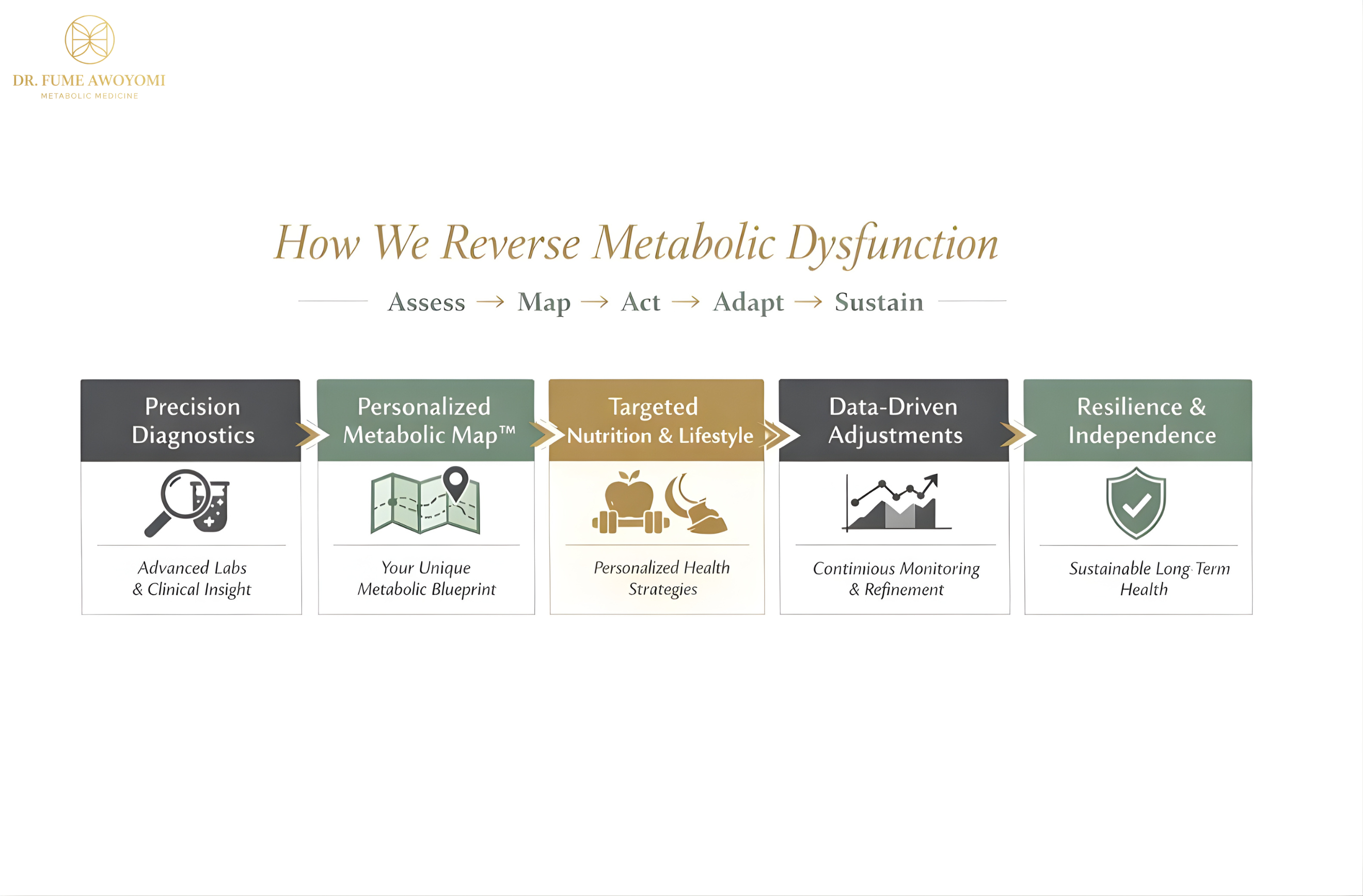
ASSESS → MAP → ACT → ADAPT → SUSTAIN
- Precision Diagnostics — Advanced labs + clinical insight to identify root causes
- Personalized Metabolic Map™ — A clear blueprint of how your metabolism functions as a system
- Targeted Nutrition + Lifestyle Protocol — Physiology-aligned strategies tailored to your biology and culture
- Ongoing Data-Driven Adjustments — Continuous refinement based on real metabolic response
- Long-Term Resilience & Independence — Sustainable health, clarity, and confidence beyond the program
Metabolic health reflects how efficiently your body regulates energy, blood sugar, hormones, inflammation, and weight. When metabolism is functioning well, the body adapts smoothly to daily demands. When it's strained, symptoms like fatigue, weight gain, poor sleep, and chronic disease risk often appear long before labs become abnormal.
Metabolic Concierge Medicine is a physician-led care model focused on root-cause evaluation and long-term metabolic resilience. Unlike traditional visits limited by time and scope, this approach allows for deeper assessment, personalized strategies, and ongoing guidance tailored to your biology and life context.
Metabolic Mapping™ is a precision framework developed to understand how your metabolism is functioning as a system. It integrates:
- Advanced metabolic diagnostics
- Lifestyle and sleep physiology
- Nutrition and cultural food practices
- Environmental and access-related factors
This allows care to be individualized, not template-based.
This practice is well suited for adults who:
- Struggle with weight loss despite effort
- Experience persistent fatigue or poor sleep
- Have been told their labs are "normal" but feel unwell
- Are managing or trying to prevent chronic metabolic disease
- Want physician-led, data-driven care with depth and continuity
No. Many patients seek care before diabetes develops. Early metabolic dysfunction often shows up as insulin resistance, weight gain, fatigue, or sleep disruption. Addressing these early can prevent progression to more serious disease.
When appropriate, medications may be used as part of a comprehensive metabolic strategy. Medication is viewed as supportive—not a failure—and is always considered within the broader context of lifestyle, physiology, and long-term goals.
This is not a diet program or short-term weight-loss challenge. While weight regulation often improves, the primary focus is restoring metabolic function, improving energy and sleep, and reducing long-term disease risk.
Traditional care is often constrained by time, standardized lab ranges, and symptom-based treatment. This model allows for:
- Longer visits
- Deeper interpretation of labs
- Contextual, culturally responsive care
- Longitudinal physician involvement
The goal is understanding, not just management.
The Metabolic Reset™ is a 12-week, physician-designed group program focused on restoring metabolic signaling through education, habit recalibration, and physiology-aligned strategies. It is ideal for individuals who want structured guidance but do not yet need concierge-level care.
This practice operates on a concierge / cash-based model. This allows for greater flexibility, time, and personalization in care. Detailed pricing and options are discussed during the consultation process.
You can begin by completing the Metabolic Health Assessment below, which helps identify early metabolic strain and determine the most appropriate next step—education, group support, or physician-led care.
When healthcare ignores context, it treats numbers instead of people. Common limitations include:
- Snapshot lab interpretation
- Symptom-based prescribing
- Time constraints
- Lack of cultural, educational, and environmental context
Across genders, most commonly reported improvements include:
- Sustainable weight regulation
- Improved energy and sleep quality
- Better glucose control
- Reduced inflammation markers
- Greater confidence in managing long-term health
Metabolic Health Assessment
Answer the following questions to assess your metabolic health status. Select the option that best describes your current situation.